
The internet has always evolved, but the changes happening in 2026 are unlike anything seen before. For more than two decades, people relied on Google to search for websites, compare information, and find answers. Today, that habit is changing quickly. Instead of typing a few keywords and opening multiple pages, users are asking questions naturally and receiving complete answers within seconds. This shift explains Why AI Is Replacing Traditional Search and why millions of people are embracing a smarter way to discover information online.
The rapid growth of artificial intelligence has completely transformed the way people interact with a search engine. Modern AI systems understand context, recognize user intent, and provide detailed responses that feel like a conversation rather than a list of links. Whether someone wants travel advice, coding help, financial guidance, or product recommendations, AI can organize complex online information into simple, readable answers. This new approach is creating a faster and more enjoyable search experience for users across the United States.
Businesses are also adapting to this transformation. Search behavior no longer revolves around typing short phrases such as “best laptop” or “cheap flights.” Instead, users ask complete questions like, “Which laptop is best for a graphic design student with a budget under $1,000?” AI understands the meaning behind these requests and delivers personalized answers. As this technology continues improving, understanding Why AI Is Replacing Traditional Search becomes essential for businesses, marketers, students, and everyday internet users.
What Is AI Search?
Traditional search engines work by matching keywords with billions of indexed web pages. After processing a search query, they display a ranked list of websites based on relevance, authority, and hundreds of other ranking factors. Although this system has served users well for many years, it often requires opening several pages before finding the right answer. That process can become frustrating, especially when information is scattered across multiple sources.
Modern AI-powered search works differently. Instead of simply displaying links, it studies your question, understands context, and generates a complete response using advanced language models. These systems rely on machine learning to recognize language patterns, remember previous questions, and explain difficult topics in simple English. Rather than searching page after page, users receive organized answers within seconds.
This innovation has fueled the growth of AI search engines that are changing how people research information. Platforms such as ChatGPT search, Gemini AI, and Perplexity AI now help users write emails, compare products, summarize documents, solve programming problems, and even plan vacations. These tools reduce the time spent searching while improving productivity.
Understanding the Shift from Keywords to Conversations
Think about how people searched five years ago. A user might type “weather New York” or “best smartphones 2026.” Today, the same person is more likely to ask, “Should I carry an umbrella in New York tomorrow afternoon?” or “Which smartphone has the best battery life for travel and photography?” This evolution toward conversational search makes searching feel much more natural.
AI understands the meaning behind these questions rather than focusing only on keywords. It remembers follow-up questions, maintains context, and provides increasingly accurate recommendations. This conversational ability represents one of the biggest reasons Why AI Is Replacing Traditional Search across nearly every industry.
Why AI Is Replacing Traditional Search Faster Than Expected
Technology usually changes gradually, yet AI adoption has accelerated at an extraordinary pace. Companies such as Google, OpenAI, Microsoft, and Anthropic have invested billions of dollars into developing advanced language models capable of understanding human conversations. These improvements allow AI to summarize information, answer follow-up questions, and explain complex subjects in ways that traditional search engines simply cannot.
One of the main reasons behind this rapid growth is convenience. People no longer want to visit ten different websites to answer a single question. They prefer one accurate explanation that saves time and removes unnecessary effort. AI provides exactly that. Whether researching insurance policies, comparing smartphones, planning a business trip, or learning a new programming language, users receive detailed responses almost instantly.
Another major factor driving adoption is the increasing popularity of AI search trends in workplaces and schools. Professionals use AI to draft reports, summarize meetings, analyze large documents, and generate ideas. Students rely on AI to understand difficult concepts, solve math problems, and improve writing. Small businesses use AI to streamline customer service and improve digital marketing strategies. Every industry is finding practical ways to integrate AI into daily workflows.
Unlike traditional search, AI also adapts to the user’s needs during a conversation. If the first answer isn’t detailed enough, users can simply ask follow-up questions without starting a completely new search. This interactive approach saves time while creating a smoother search experience. It is one of the strongest reasons discussions about Why AI Is Replacing Traditional Search continue dominating technology news in 2026.
How Google Search Has Changed in 2026
Google remains the world’s leading search engine, but its approach has evolved significantly. Instead of displaying only the familiar list of blue links, Google now uses Google AI Mode to provide intelligent summaries at the top of many search results. These AI-generated responses combine information from trusted sources while still allowing users to visit original websites for deeper research.
This change reflects a broader transformation in how search works. Google understands that users expect quick answers rather than endless browsing. By combining traditional web indexing with generative AI, the company delivers responses that are easier to understand and more relevant to individual needs. Users can ask follow-up questions naturally without repeating their original search, making the experience feel more conversational.
Google AI Mode Explained
Google AI Mode uses advanced artificial intelligence models to analyze questions before generating concise answers. Instead of returning only links, it summarizes key information, compares products, explains technical concepts, and provides recommendations based on context. For example, someone searching for the best family vacation destination receives a detailed comparison of locations, travel tips, estimated costs, and weather conditions instead of just a collection of travel websites.
Google has also improved personalization. Search results increasingly reflect previous searches, location, and preferences while maintaining access to trusted sources. This balance between AI-generated summaries and traditional search results demonstrates how Google is adapting to the growing future of search without abandoning its core search technology.
ChatGPT Search vs Google AI Mode vs Gemini AI vs Perplexity AI
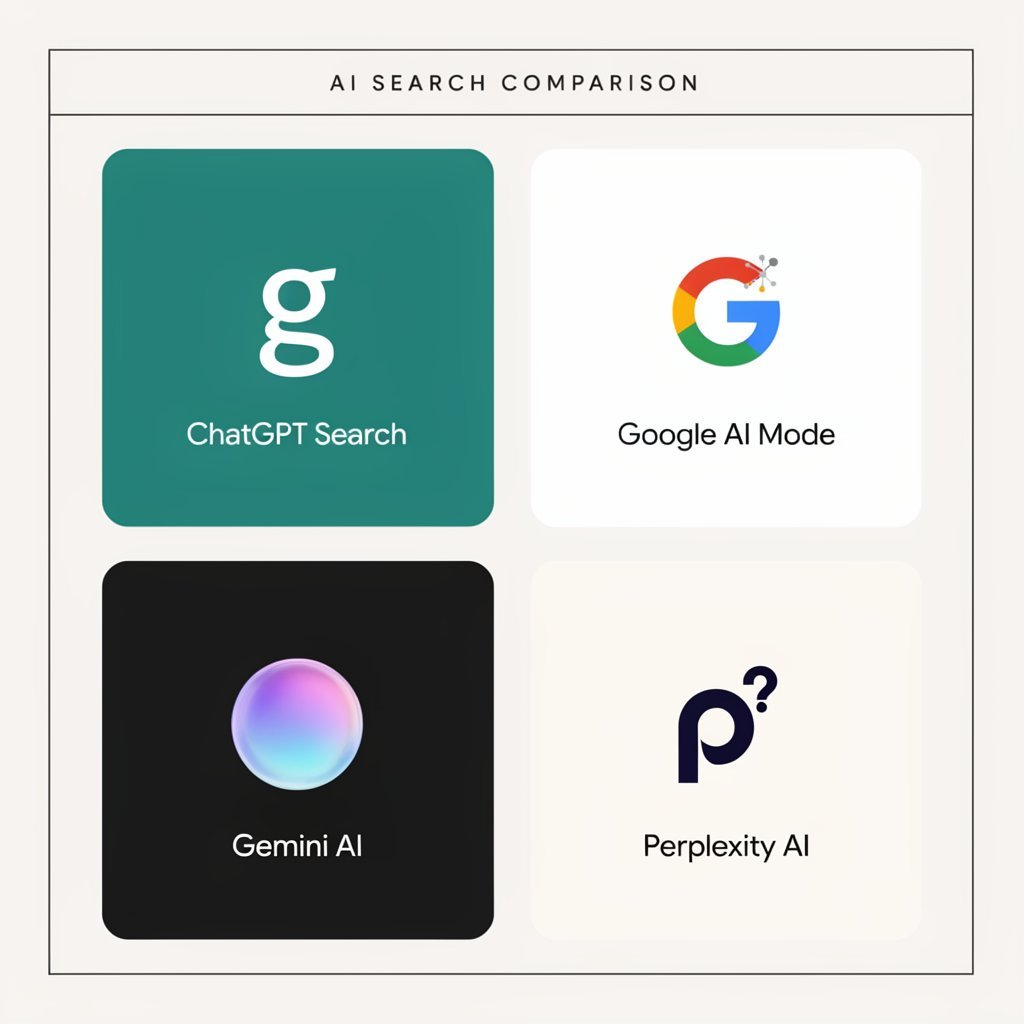
Competition among AI platforms has encouraged rapid innovation. Every major platform offers unique strengths while targeting different types of users. Some focus on conversational responses, while others prioritize real-time information or source transparency. Understanding these differences helps users choose the best tool for specific tasks.
| Feature | Google AI Mode | ChatGPT search | Gemini AI | Perplexity AI |
|---|---|---|---|---|
| Conversational Answers | Excellent | Excellent | Excellent | Excellent |
| Live Web Access | Yes | Yes | Yes | Yes |
| Source Citations | Moderate | Good | Moderate | Excellent |
| Best for Research | Very Good | Excellent | Excellent | Outstanding |
| Productivity | High | High | High | Moderate |
| Follow-up Conversations | Yes | Yes | Yes | Yes |
Each platform continues improving every month. ChatGPT search excels at explaining complex topics in simple language. Gemini AI integrates deeply with Google’s ecosystem and productivity tools. Perplexity AI has earned praise for providing source citations that make research easier. Together, these innovations highlight Why AI Is Replacing Traditional Search and why AI has become an essential tool for millions of users.
The Biggest Benefits of AI Search
The biggest advantage of AI-powered search is speed. Instead of spending twenty minutes opening different websites, users receive a detailed answer within seconds. AI understands complex questions, summarizes long documents, and presents information in a simple format. This helps students complete assignments faster, professionals make informed decisions, and families find practical solutions without wasting time. The improvement in the overall search experience is one of the strongest reasons Why AI Is Replacing Traditional Search.
Another major benefit is personalization. Traditional search often provides the same results for millions of users. AI, however, understands context and user intent. For example, a college student searching for a laptop receives different recommendations than a professional video editor because AI recognizes different needs. This personalized approach creates more accurate answers and saves valuable time.
Where Traditional Google Search Still Performs Better
Although AI is changing how people search, traditional Google Search still has important advantages. Google remains the best option for finding official government websites, business contact information, local services, live sports scores, stock prices, breaking news, and maps. These searches depend on real-time updates that require accurate indexing from trusted sources. Google’s powerful web indexing system continues to excel in these areas.
Traditional search also gives users direct access to original websites. Many people still prefer reading expert articles, academic research, or official documentation rather than relying only on AI-generated summaries. This is why AI is improving search rather than replacing every part of it. Understanding this balance helps explain Why AI Is Replacing Traditional Search without completely eliminating conventional search engines.How AI Search Is Changing SEO Forever
The growth of AI is transforming search engine optimization faster than any Google update in recent years. Website owners can no longer depend only on keyword placement and backlinks. Modern AI systems evaluate content quality, expertise, readability, and usefulness before recommending information. They understand relationships between topics rather than focusing only on repeated keywords.
This change encourages publishers to create comprehensive articles that answer multiple questions naturally. High-quality content, strong internal linking, fast loading pages, and excellent user experience have become more important than ever. Businesses that invest in trustworthy content are more likely to appear in both traditional search results and AI-generated answers.
Why Website Owners Must Adapt
Successful websites now focus on solving problems instead of chasing algorithms. Content should answer common questions clearly, include helpful examples, and remain updated as information changes. Readers appreciate trustworthy advice, and AI platforms reward websites that consistently provide valuable information. This approach builds authority while supporting long-term growth.
Challenges and Risks of AI Search
Despite its impressive capabilities, AI still has limitations. Language models sometimes generate incorrect information or misunderstand complicated questions. These mistakes, often called AI hallucinations, remind users to verify important facts before making financial, legal, or medical decisions. AI should assist research rather than replace critical thinking.
Privacy is another important challenge. Many AI systems collect data to improve recommendations and personalize the search experience. Users should understand how their information is stored and review privacy settings regularly. Responsible development and transparent policies will play a major role in shaping the future of search over the coming years.
How Businesses Should Prepare for the Future
Businesses that adapt early will have a significant advantage. Instead of publishing hundreds of short articles targeting single keywords, companies should focus on creating detailed resources that answer customer questions completely. Original research, expert opinions, updated statistics, and practical examples help establish trust with both readers and AI systems.
Technical improvements also remain essential. Fast-loading pages, secure websites, mobile-friendly design, structured data, and clean site architecture all improve visibility. Strong digital marketing strategies combined with high-quality content create a solid foundation for long-term success as AI continues changing the online world.
| Traditional SEO | Modern AI SEO |
|---|---|
| Keyword stuffing | Focus on user intent |
| Quantity of pages | Quality of content |
| Ranking only | Visibility in AI answers |
| Basic backlinks | Authority and trust |
| Short articles | Comprehensive guides |
| Search traffic | Multi-platform discovery |
What the Future of Search Looks Like
The internet will continue evolving beyond 2026. Search is becoming more conversational, visual, and personalized. Instead of typing keywords, users will increasingly interact with voice assistants, upload images, or ask AI to complete tasks automatically. This evolution will make finding information easier than ever before.
Experts also expect AI to become more integrated with everyday life. Future systems may book appointments, compare insurance plans, summarize meetings, plan vacations, and manage daily schedules with minimal input. These developments demonstrate that the future of search extends far beyond finding websites. AI is becoming a personal research partner that helps people make smarter decisions.
Frequently Asked Questions
| Question | Answer |
|---|---|
| Is AI replacing Google completely? | No. AI is changing how Google works rather than replacing it. |
| Will search engine optimization still matter? | Yes. Quality content remains essential for visibility. |
| Which AI platform is best? | It depends on your needs. ChatGPT search, Gemini AI, and Perplexity AI all have different strengths. |
| Can AI always be trusted? | No. Always verify important information using reliable sources. |
Want More Trending News? visit our News Section.

The founder and content creator behind RankWithUmar.com, covering celebrity news, entertainment updates, and trending digital stories